Secure Video Downloads
Built a secure offline video download system for Shikho so students in low-connectivity regions could keep learning without exposing premium content to piracy.
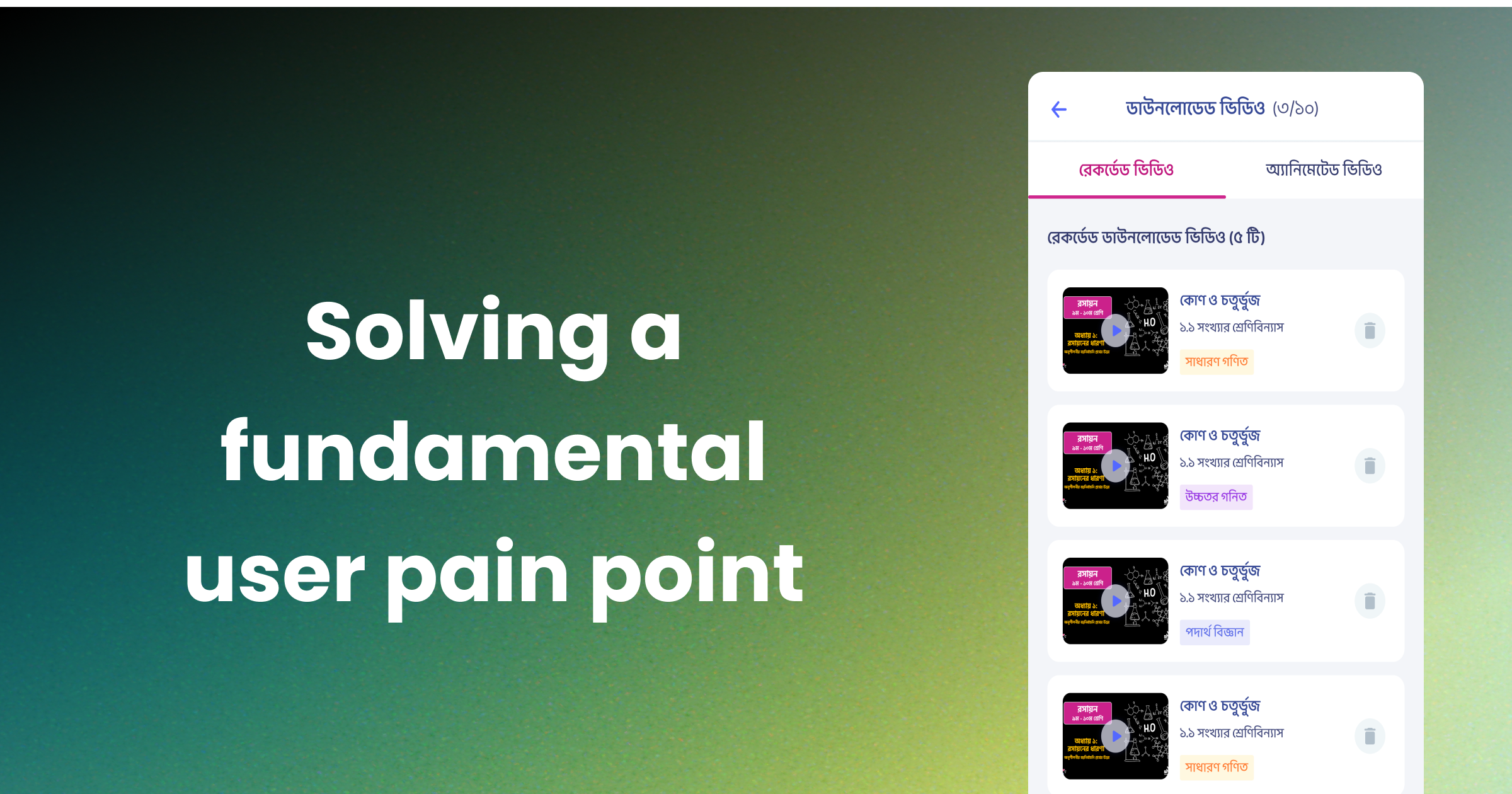
Secure Offline Learning: Building Video Downloads for Students With Unreliable Internet
As Shikho expanded outside major urban centers, one problem kept resurfacing: many students wanted to learn, but they could not rely on stable internet access to stream lessons when they needed them. I led the product design for a secure video download experience that let students keep learning offline while protecting premium educational content from easy piracy.
Context
Shikho’s core product experience depends heavily on video lessons. That worked well for learners with stable broadband or affordable mobile data, but it broke down for a large segment of students in rural and lower-connectivity regions.
For these learners, streaming was expensive, inconsistent, and frustrating. A student might want to study later in the evening, during travel, or in a location with weak connectivity, only to find that the lesson would not load smoothly. The product delivered value only when the network cooperated.
This meant the problem was bigger than a missing convenience feature. It was an access problem. If a student could not reliably watch the content they had paid for, then the product was failing at the point of actual learning.

The Problem
Three constraints had to be solved together:
- Students needed to access lesson videos offline.
- The experience had to be simple enough to use on mobile devices with limited storage and unstable internet.
- The business could not introduce a basic file-download system that made premium content easy to copy, extract, or redistribute.
This created a classic product tension between accessibility and content protection. A weak implementation would help users in the short term but create long-term commercial risk through piracy. A security-first implementation with too much friction would fail to solve the user problem.
My Role
I defined the product requirements and experience strategy for the secure download system. My responsibility was to ensure that the solution served both learner needs and platform constraints:
- identify the user segment most affected by connectivity gaps
- frame the problem as both an engagement issue and an access issue
- define the key download and playback flows
- shape the product so security requirements did not overwhelm usability
Product Approach
I proposed a three-part solution.
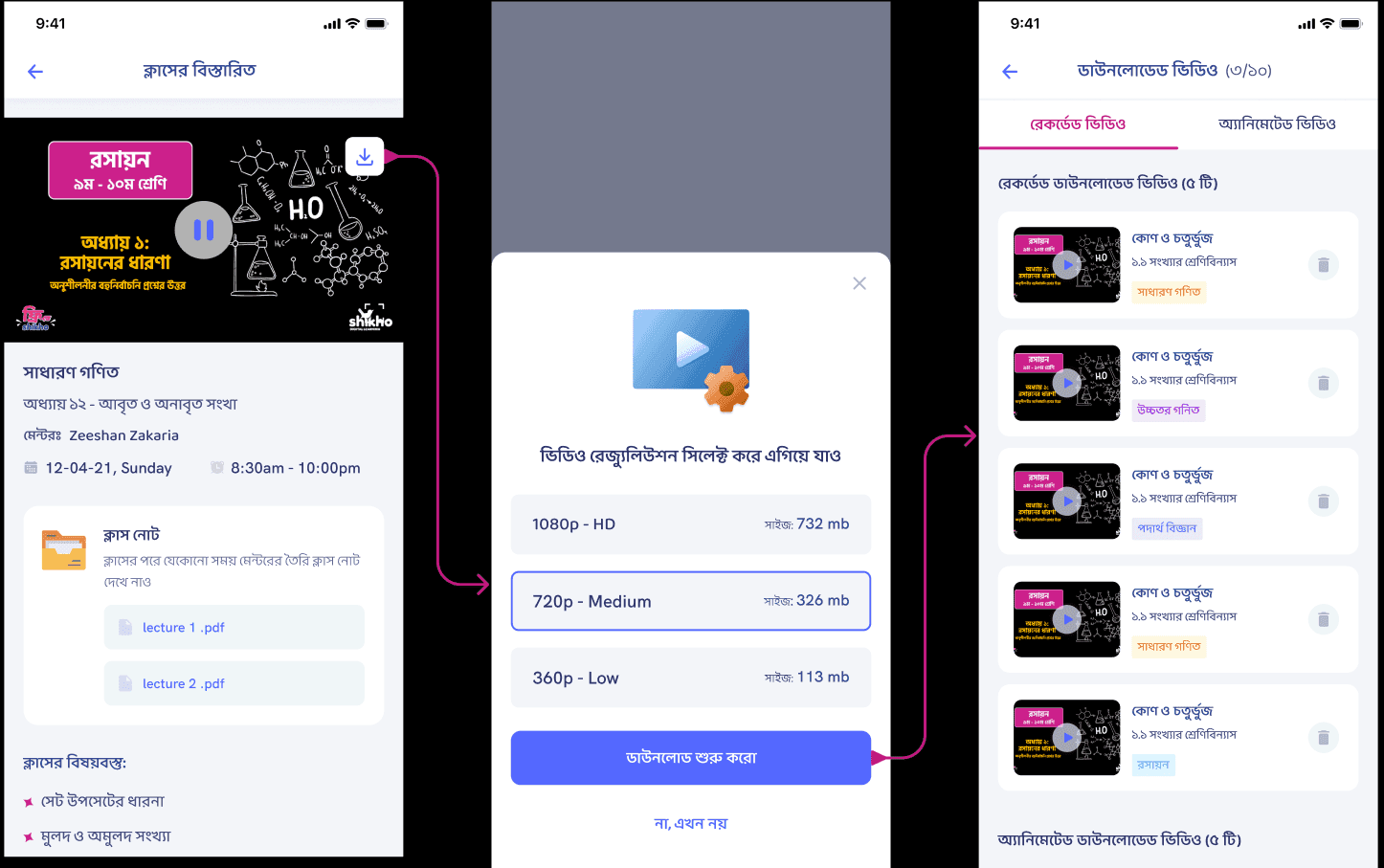
1. Secure on-device downloads
Students needed a clear way to save a lesson for later, but downloaded files could not behave like freely shareable media files. The design centered on a controlled in-app download flow rather than a generic export flow.
2. Offline access library
Downloaded content needed a dedicated home. I designed a library experience where students could easily find and manage the lessons they had saved, rather than forcing them to remember which lessons were stored on the device.
3. Offline-first consumption
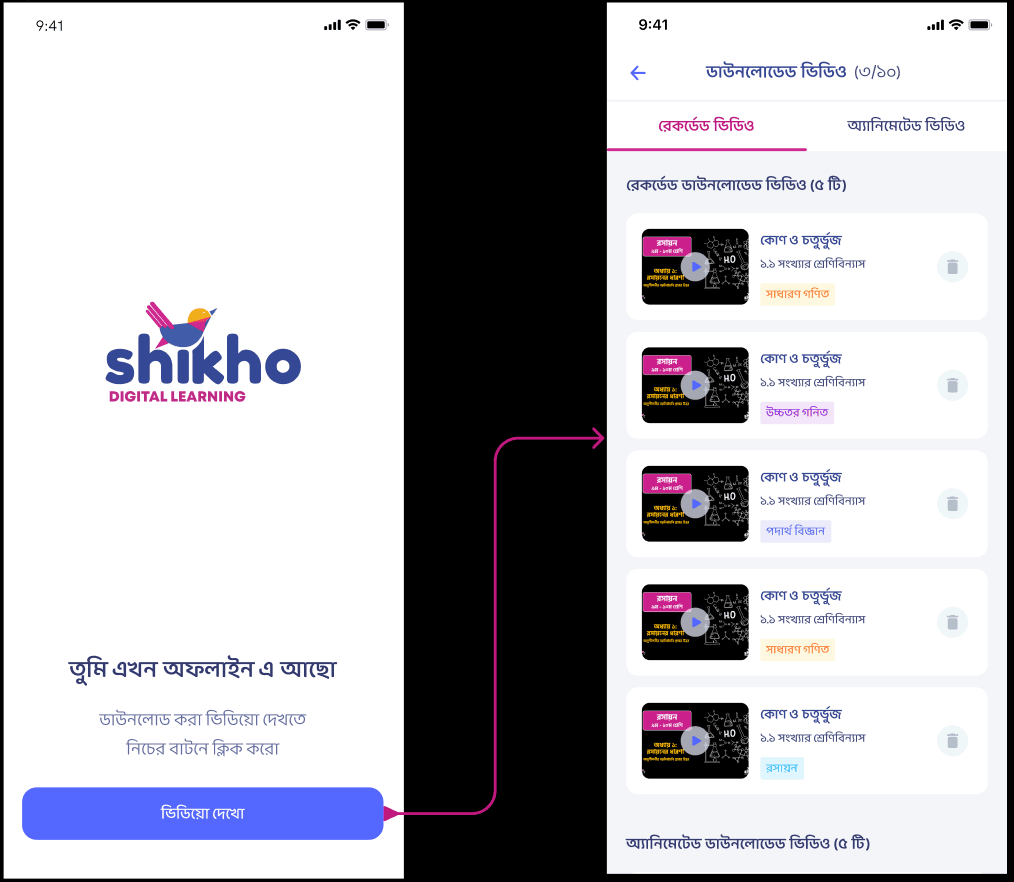
The feature would have failed if it only stored content without making playback reliable offline. The viewing experience had to remain usable even when the learner had no active connection.
Design Decisions
Several product decisions made the system more useful in practice:
- the download action was integrated into the normal learning flow instead of hidden behind settings
- offline content was grouped into a separate library to reduce confusion
- the experience prioritized clarity around what was already available on-device versus what still required network access
- the solution was intentionally designed as a secure playback system, not a raw file transfer mechanism
That last decision mattered most. Users were asking for downloads, but what they actually needed was confidence that they could study later without internet. By focusing on the learning outcome rather than the file itself, we were able to design a system that supported access without undermining content protection.
Outcome
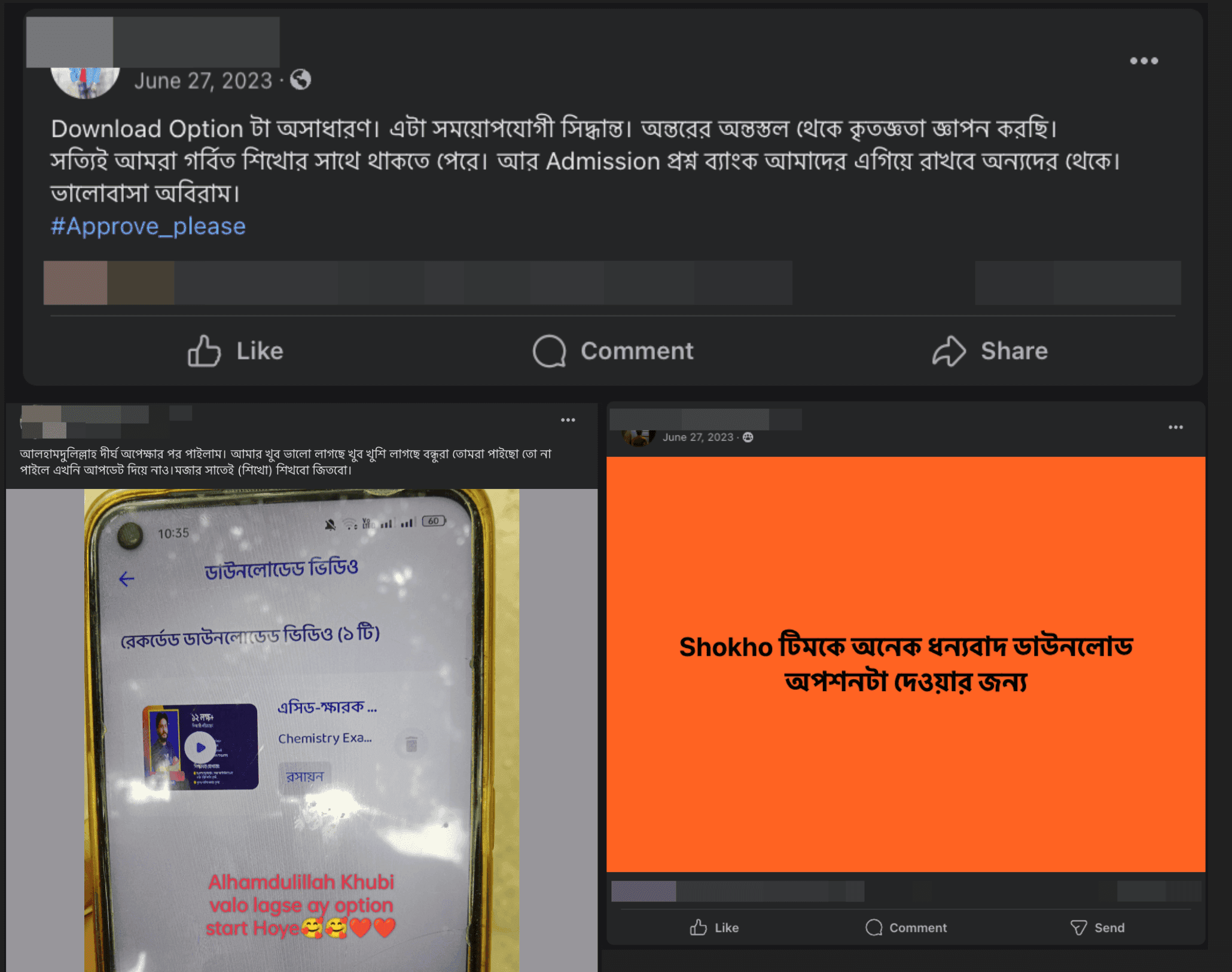
The feature addressed one of the most requested product gaps in the app. It gave students in bandwidth-constrained environments a more dependable path to consume lessons and helped Shikho serve a broader geographic audience more effectively.
The resulting experience did more than improve convenience. It expanded when and where learning could happen:
- students could save content while connected and study later offline
- rural users were less dependent on stable broadband
- the product became more resilient to real-world network conditions
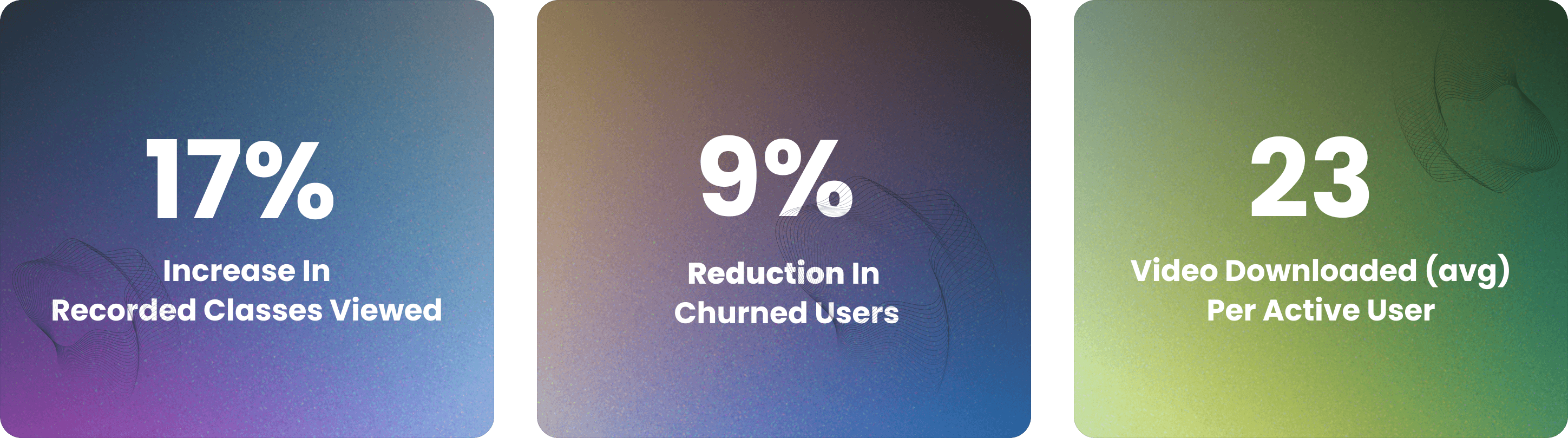
Product Impact
This project reinforced an important principle for EdTech in emerging markets: infrastructure constraints are product constraints. A feature that looks optional in a high-connectivity market can become essential in a low-connectivity one.
Secure video downloads helped Shikho align the product with the lived reality of its users. It allowed the platform to protect premium educational content while still delivering on the more important promise: students should be able to learn when they are ready, not only when the internet is.
More Projects

Ads Pipeline Implementation
End-to-end ads data pipeline and mobile attribution system that unified Facebook Ads, Google Ads, and in-app event tracking into a single BI layer for campaign optimization.

In-House CRM Transformation
Led the shift from a third-party CRM to a custom in-house sales platform for Shikho's 200-agent telesales team, improving data access, customization, and cost control.

Installment Plan System
Flexible installment-based course purchasing that expanded access to education for students who could not pay upfront.