A Product Manager's Secret Weapon: Prioritization Frameworks
A guide to essential prioritization frameworks for PMs — including MoSCoW, Value vs. Effort, RICE, and the Kano Model.

In the fast-paced world of product management, there are always more ideas than resources. That’s why prioritization is essential in a product manager’s toolkit.
In one sentence: Prioritization frameworks — like MoSCoW, RICE, Value vs. Effort, and the Kano Model — give product managers a repeatable, defensible process for deciding which features to build next, replacing gut-feel decisions with structured criteria that align engineering effort with business impact. Effective prioritization allows you to hone in on the highest-impact initiatives, ensuring your product strategy delivers maximum value to users and your business.
As an aspiring product manager or junior team member, a deep understanding of prioritization will help you succeed in your daily tasks and demonstrate strategic thinking skills that are essential for growth. Let’s explore the world of product prioritization, including common frameworks and real-life examples.

Why is Prioritization So Critical?
As product managers, we often face many challenges when building products. We must balance those challenges to do our work properly and ensure we don’t get burned out. Below are some reasons why we, as product managers, must take prioritization very seriously.
-
Limited Resources: Time, development capacity, and budgets are always in short supply. Prioritization ensures you’re maximizing the use of your team’s efforts and resources.
-
Alignment with Company Goals: Focusing on the right initiatives is critical to aligning your product roadmap with your organization’s larger objectives.
-
Focus and Efficiency: Clearly defined priorities boost productivity and minimize wasted time and potential rework.
-
Clear Decision-Making: Robust prioritization frameworks help you explain your choices objectively to stakeholders, reducing friction and increasing confidence in your leadership.
Let’s delve into some tried-and-tested frameworks that can help you tackle your ever-growing product backlog.

MoSCoW Method
It’s a classic for a reason! MoSCoW stands for:
-
Must-Have: Features that are critical to the core functionality of your product.
-
Should Have: Important, but your product could still function without them.
-
Could Have: Nice-to-haves to add if time and resources permit.
-
Won’t Have (this time): Features parked for later, potentially for a future release.
Here’s an example of how you can think of applying MoSCoW method:
Imagine you’re developing an e-commerce app. “Must Haves” would include a shopping cart, payment gateway, and search functionality. “Should Haves” might include wishlists and product reviews. “Could Haves” could include social sharing integration.
Value vs. Effort
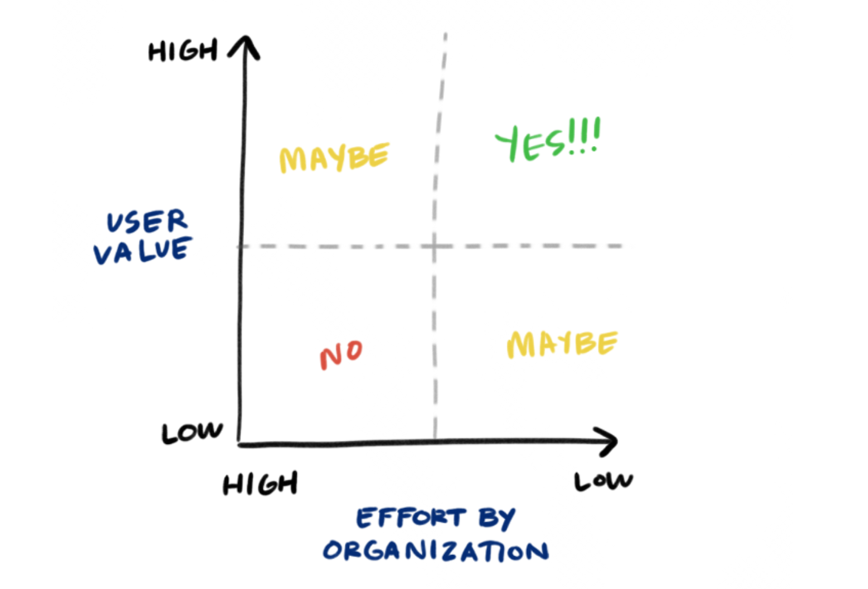
This framework helps balance potential value against the resources required. Plot potential features or projects on a matrix with axes labeled “Value” (impact on customers, business goals) and “Effort” (development time, cost).
-
High Value, Low Effort: Your quick wins and significant opportunities.
-
High Value, High Effort: These justify substantial investment but might require careful planning.
-
Low Value, Low Effort: Can be fillers after essential work.
-
Low Value, High Effort: Usually the first to get scrapped from the roadmap.
The RICE Method
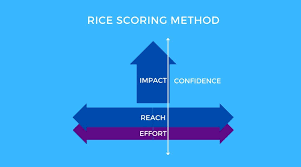
The RICE method offers a data-driven approach using:
-
Reach: How many customers will the feature impact? (Assign a score of 0.25, 0.5, 1, 2, 3)
-
Impact: How much potential benefit does it offer? (Assign a score of 0.25, 0.5, 1, 2, 3)
-
Confidence: How sure are you of the feature’s success? (Use a percentage like 50%, 80%, or 100%)
-
Effort: How many person-months will it take to build?
After adding scores to all the parameters, we then use the formula to get the RICE score, which is then used to prioritize the tasks - tasks with higher scores get prioritized first.
Formula: (Reach x Impact x Confidence) / Effort = RICE Score
Kano Model
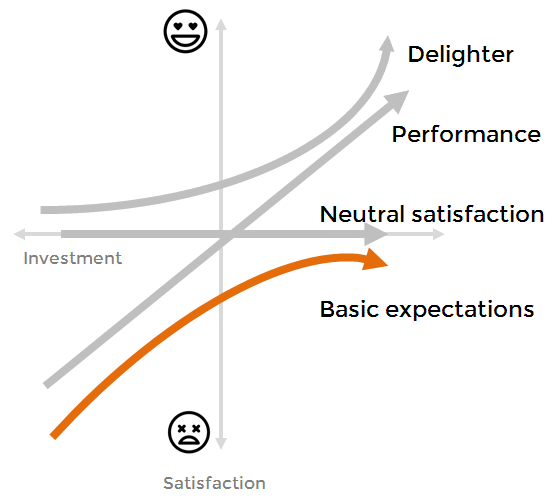
This focuses on customer satisfaction. It classifies features as:
-
Must-haves: Basic expectations. Customers will be dissatisfied if they’re absent.
-
Performance Features: Their level of implementation directly affects customer satisfaction.
-
Delighters: Unexpected bonuses that can generate excitement.
Here’s how you can try using Kano Model:
A music streaming app must have basic playback functionality. Offering a wider song library is a performance feature. A surprise concert ticket giveaway could be a delight.
A 2023 ProductPlan State of Product Management survey found that 40% of product managers don’t have a clearly defined prioritization process — meaning nearly half of all PMs are making roadmap decisions without a consistent framework, which leads to misalignment, wasted engineering cycles, and frustrated stakeholders.
Research from McKinsey and Company shows that companies with mature product management practices — including structured prioritization — achieve 2× faster time-to-market and significantly higher customer satisfaction scores compared to companies where prioritization is informal or driven solely by leadership opinion.
Conclusion
Mastering the art of prioritization is a lifelong endeavor for product managers. As you gain experience, you’ll develop an intuition for balancing your product’s, users’ needs, and the broader business. The ability to prioritize with intention and agility will set you apart as a strategic leader, ensuring that your product delivers maximum value while meeting changing market demands.

Rifat Bin Alam Rohit
Product Lead at Shikho with 5+ years building edtech and logistics products. Currently leading AI features used by 200K+ students. Teaching 1,700+ learners about product management and data storytelling.
More Posts

Should You Join a Startup as a Product Manager?
Key considerations before joining a startup as a PM — from evaluating growth opportunities to understanding the chaos that comes with it.

Difference Between Product Managers and Other Roles
How the product manager role compares to business analysts, content strategists, and programmers — and why PMs are unique.

How to Become a Product Manager After Undergrad?
Practical tips for breaking into product management straight out of university — from key skills to networking strategies.