Difference Between Product Managers and Other Roles
How the product manager role compares to business analysts, content strategists, and programmers — and why PMs are unique.

In one sentence: Product managers own the entire product lifecycle — from strategy and prioritization to cross-functional execution and go-to-market — while business analysts focus on discovery and requirements, content strategists own messaging, and programmers build the actual product; the PM is the only role accountable for all three simultaneously.
The field of software and technology is constantly changing, and with those changes come new job titles. As the old saying goes — “Keep your eye on the ball,” which in this case means staying up to date on what is happening in the world of software development. TRUST ME, things change so fast; you’d feel like a boomer without even being that old!
Working in product management can be challenging because you are responsible for keeping track of many moving parts. You need to understand everything from customer feedback to sales figures while monitoring industry trends. It’s difficult to hit the ground running when you first begin working as a product manager because many responsibilities are involved. (For a more detailed understanding — read the previous article)
Suppose you are thinking about making the switch or just exploring your options. In that case, it’s essential to understand all the pros and cons of working as a product manager compared to other roles like marketing, business analysis, or content strategist (yours truly moved into Product Management from a hybrid analyst role). Here are some of the top differences between these roles:
Responsibilities of a Product Manager
One of the most important things to understand is that there is no definition of what a product manager does. It is a broad role that can vary significantly from company to company. A product manager typically has three primary responsibilities:
-
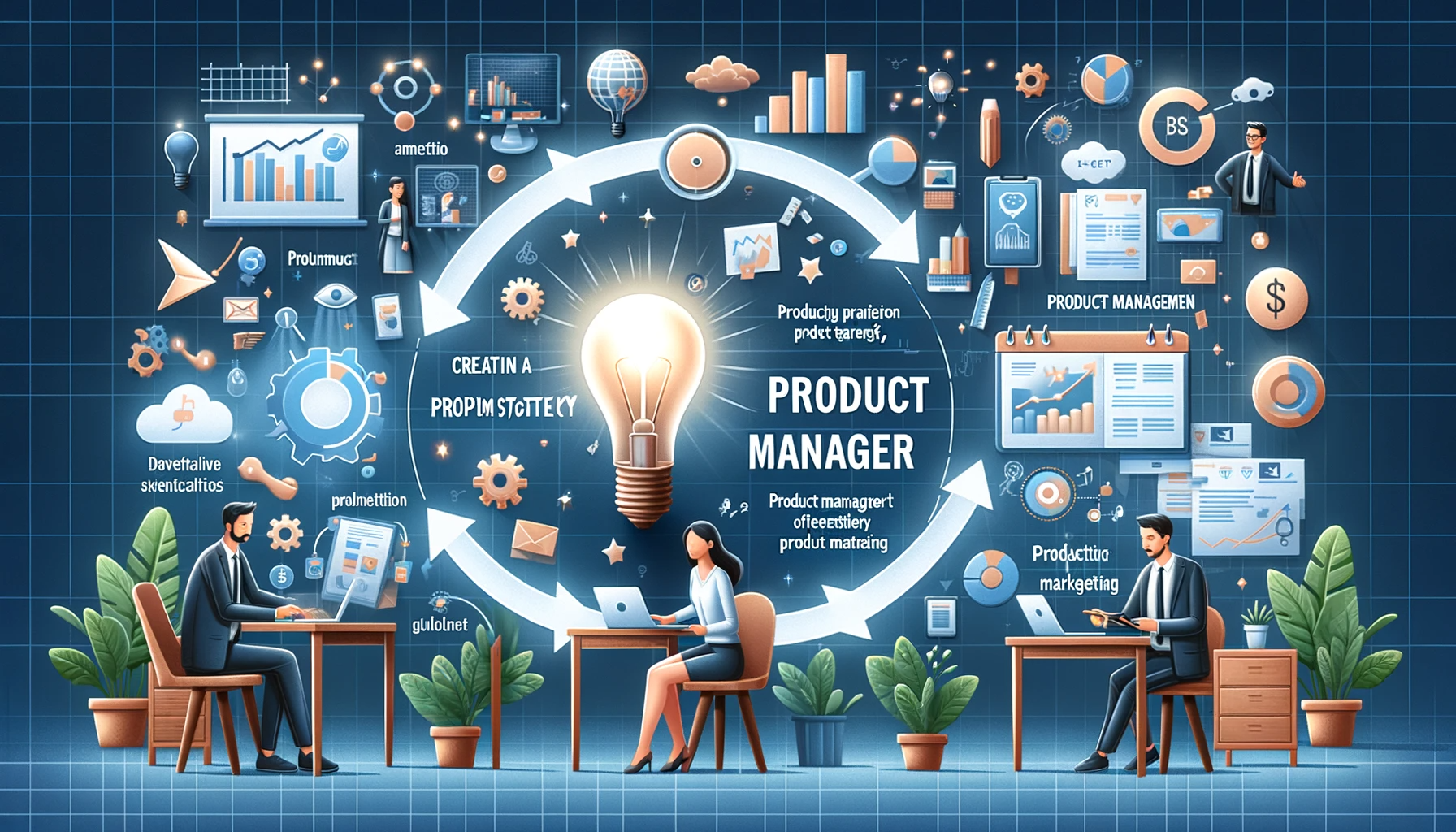
Creating a Product strategy – Defining the product
-
Product management – Managing the product lifecycle, from prioritizing features to helping with a go-to-market strategy.
-
Product marketing – Marketing, educating customers, and selling the product.
To learn how to become a product manager, read my previous article — here.
Business Analyst vs. Product Manager
Business analysts focus on the product lifecycle, whereas product managers focus on the product development process. Business analysts play a crucial role in the development process, but that is where their involvement ends. As a product manager, you are focused on staying up to date with customer feedback, sales figures, and new technologies in the market. You need to understand what your customers need and how to give it to them in a way that allows you to scale the product. Business analysts are focused on the product lifecycle. They are focused on the discovery phase, creating the initial product roadmap, and doing the research that will help inform the direction of the product. They also focus on the implementation phase and ensure a smooth transition when new products are developed.
Content Strategist vs. Product Manager
Content strategists focus on creating the right content for your audience (AMAZING Content — AMAZING experience). They need to understand how that content will help your customers and how to make it interesting enough to share with their network (Check out Zomato Push Notifications). Product Managers don’t focus on the actual creation of that content. That is the job of a writer or content strategist. Product managers need to understand how that content will be read and what it means for the product.
Product managers need to give the content strategist/content writer a product feature brief and demo to help the content teams to better frame the content around the objective of the content. Content can range from a Push Notification to a Blog Post (SEO purposes) or a campaign copy for social media. In all these aspects, the content team and the product manager must work together to ensure the user can understand what is being communicated.

Programmer vs. Product Manager
Programmers are focused on creating the product. They are typically part of the development phase. They are working on building the product from scratch or sometimes fixing bugs or kinks in products that have already been developed.
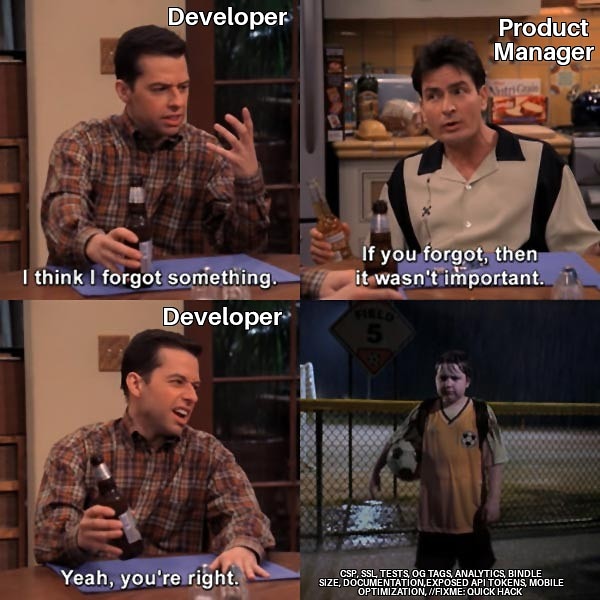
Product managers, on the other hand, are focused on the development phase but also need to pay attention to the product lifecycle. They need to understand how they can improve the product based on customer feedback and new technologies in the market. They also need to know how those new technologies can be integrated into the product. Hence at times, programmers and product managers are frenemies! (there are too many hilarious memes on this)
It is not uncommon for programmers to transition into Product Management. Not every product manager is the same, as each product manager has different skill sets relevant to different stages of the product. Programmers oftentimes transition into a Technical Product Manager role, wherein they don’t actually write code to create the product/feature; rather, they more closely guide other programmers on building things that can scale.
According to Glassdoor’s 2024 salary data, the median base salary for a Product Manager in the US is around $120,000 — compared to roughly $85,000 for a Business Analyst — reflecting the broader ownership and accountability that comes with the PM role.
A LinkedIn Workforce Insights report found that the career paths of Business Analysts and Product Managers diverge sharply within five years: BAs tend to specialize vertically into data or process domains, while PMs move horizontally into leadership, strategy, or CPO tracks — a direct result of the cross-functional breadth the role demands.
Wrapping Up: Understanding the Distinct Roles in Tech Industry
In conclusion, the role of a product manager is multifaceted and significantly different from other roles such as business analysts, content strategists, and programmers. While product managers focus on the entire product lifecycle, from strategy to marketing, other roles have more specific responsibilities. Business analysts concentrate on the product lifecycle, content strategists create engaging content for the audience, and programmers focus on building the product. Understanding these differences is crucial for anyone considering a career switch or exploring their options in the tech industry.

Rifat Bin Alam Rohit
Product Lead at Shikho with 5+ years building edtech and logistics products. Currently leading AI features used by 200K+ students. Teaching 1,700+ learners about product management and data storytelling.
More Posts
A Product Manager's Secret Weapon: Prioritization Frameworks
A guide to essential prioritization frameworks for PMs — including MoSCoW, Value vs. Effort, RICE, and the Kano Model.

Should You Join a Startup as a Product Manager?
Key considerations before joining a startup as a PM — from evaluating growth opportunities to understanding the chaos that comes with it.

How to Become a Product Manager After Undergrad?
Practical tips for breaking into product management straight out of university — from key skills to networking strategies.